The TP-Link USB Bluetooth Adapter review centers on a straightforward way to add wireless connectivity to a Windows desktop or laptop.
The UB500 Plus pairs Bluetooth 5.3 support with an adjustable antenna, making it worth considering when placement and compatibility matter.
TP-Link UB500 Plus Review Summary
The quick verdict
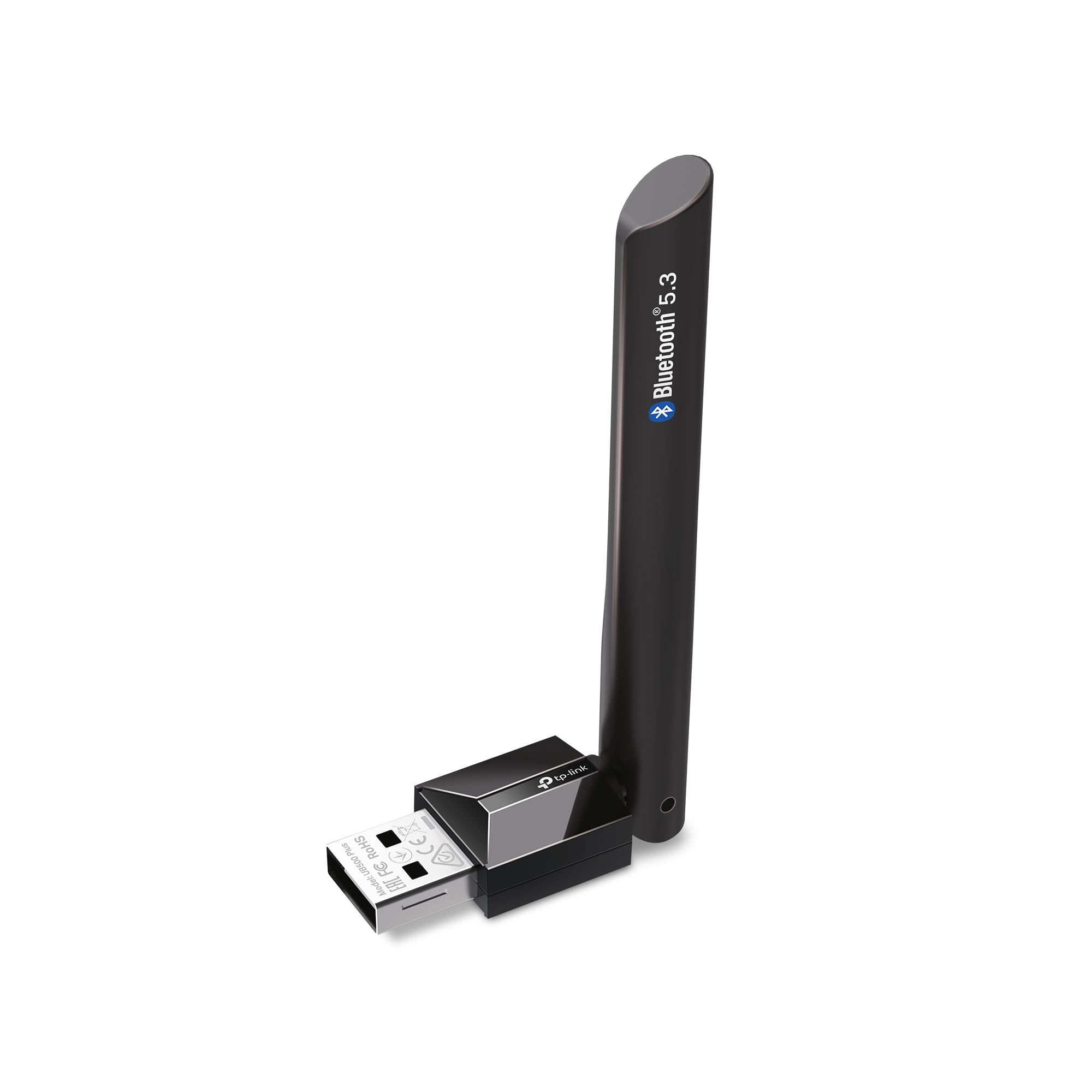
1,000+ ratings
Read Amazon ReviewsTP-Link UB500 Plus
A fit for Windows PC owners who want to add Bluetooth with an adjustable antenna and support for a range of older Bluetooth devices.
- Bluetooth 5.3 support with EDR technology.
- Backward compatibility with Bluetooth 4.2, 4.0, 3.0, 2.1, 2.0, and 1.1.
- Bluetooth Low Energy support.
- Adjustable, multidirectional antenna that can be rotated to change its position.

Pros
- Supports Bluetooth 5.3 while retaining compatibility with a broad range of older Bluetooth versions.
- Adjustable antenna gives buyers some control over adapter orientation and placement.
Consider before buying
- Windows 7 setup requires a driver rather than the plug-and-play process described for newer supported versions.
- Plug-and-play setup for Windows 8.1, 10, and 11 depends on an internet connection.
Read the full review summary
The UB500 Plus is designed to turn a non-Bluetooth PC into a Bluetooth-capable one through a USB connection.
It supports Bluetooth 5.3 with EDR and BLE, and lists compatibility with Bluetooth versions 4.2, 4.0, 3.0, 2.1, 2.0, and 1.1.
That broad version range may help when a computer needs to connect with a mix of newer and older peripherals.
Its adjustable, multidirectional antenna gives the adapter more placement flexibility than a fixed-position design. Windows 8.1, 10, and 11 are described as plug and play when the computer has an internet connection; Windows 7 requires a driver.
Buyers should check their Windows version and USB access before choosing it, especially if they expect to use it with a Windows 7 machine.
The buying factors
TP-Link UB500 Plus Scorecard
Editorial scores reflect listed features and buyer fit; they are not laboratory measurements or customer ratings.
Bluetooth version support
Bluetooth 5.3 support and compatibility with several earlier versions cover a wide range of device generations.
Antenna flexibility
The adjustable multidirectional antenna allows positioning to suit the computer's surroundings.
Windows setup
Plug-and-play setup is described for Windows 8.1, 10, and 11 with an internet connection; Windows 7 needs a driver.
Legacy-device compatibility
Support for versions down to Bluetooth 1.1 is useful for buyers pairing older devices.
Low-energy support
BLE is included alongside EDR, giving the adapter support for both listed technologies.
Desktop placement fit
The antenna can be rotated and adjusted, which is useful when a desktop's location makes adapter positioning a consideration.
Key Features and Specifications of TP-Link UB500 Plus
- Bluetooth 5.3 support with EDR technology.
- Backward compatibility with Bluetooth 4.2, 4.0, 3.0, 2.1, 2.0, and 1.1.
- Bluetooth Low Energy support.
- Adjustable, multidirectional antenna that can be rotated to change its position.
- Plug-and-play setup is described for Windows 8.1, Windows 10, and Windows 11 when connected to the internet.
- Windows 7 is supported with a separately obtained driver.
Pros and Cons of TP-Link UB500 Plus
Pros
- Supports Bluetooth 5.3 while retaining compatibility with a broad range of older Bluetooth versions.
- Adjustable antenna gives buyers some control over adapter orientation and placement.
- BLE and EDR are both included.
- The listed Windows support covers Windows 7 through Windows 11, with setup differences by version.
Consider before buying
- Windows 7 setup requires a driver rather than the plug-and-play process described for newer supported versions.
- Plug-and-play setup for Windows 8.1, 10, and 11 depends on an internet connection.
- The speed and coverage improvements are stated as maximum comparisons with Bluetooth 4.0; actual results will depend on the environment and connected devices.
Who Should Buy TP-Link UB500 Plus?
Good fit
Consider the UB500 Plus if your Windows desktop or laptop lacks Bluetooth and you want one adapter that supports Bluetooth 5.3 as well as several earlier versions.
That range can be helpful when pairing current accessories alongside devices from an older setup.
The antenna is a practical reason to look at this model if the USB port's position or the computer's location makes orientation relevant.
You can rotate it to find a position that works better for your arrangement, without assuming that every placement will produce the same connection.
Before buying, confirm your Windows version and whether the computer can connect to the internet during setup.
Windows 7 users should plan to obtain the required driver; those on Windows 8.1, 10, or 11 can use the described plug-and-play route when online.
Who should skip it
Look elsewhere if you need a solution for an operating system outside the listed Windows versions, or if you cannot meet the setup conditions for your Windows version.
If your only priority is a very compact adapter, consider whether the adjustable antenna suits your available USB space and how you position the computer.
TP-Link UB500 Plus: what to consider before adding Bluetooth
Bluetooth generations and device matching
Bluetooth 5.3 support gives the adapter a current version, while backward compatibility down to version 1.1 broadens the range of devices it is intended to work with.
This can make it a flexible choice for a PC that needs to pair with more than one generation of accessory; check the Bluetooth version and requirements of any device that is essential to your setup.
Antenna placement in a real setup
The multidirectional antenna can be rotated and adjusted, so the adapter's orientation is not fixed.
That is a useful design feature for desktop users who may have USB ports facing different directions or a PC tucked into a particular position.
Try an accessible port and adjust the antenna to suit the space around the computer.
Windows installation considerations
Setup depends on the Windows version. The described plug-and-play process applies to Windows 8.1, 10, and 11 when the computer is connected to the internet; Windows 7 requires a driver.
Confirm that this matches your installation plan before relying on an out-of-box setup.
Understanding the performance language
The product description presents speed and coverage as improvements of up to twice and four times, respectively, compared with Bluetooth 4.0.
Treat those as stated maximum comparisons rather than guaranteed results for every room or pairing; computer placement, the connected device, and the surrounding environment can affect the experience.
Alternatives to TP-Link UB500 Plus
Bluetooth Network Adapters alternative
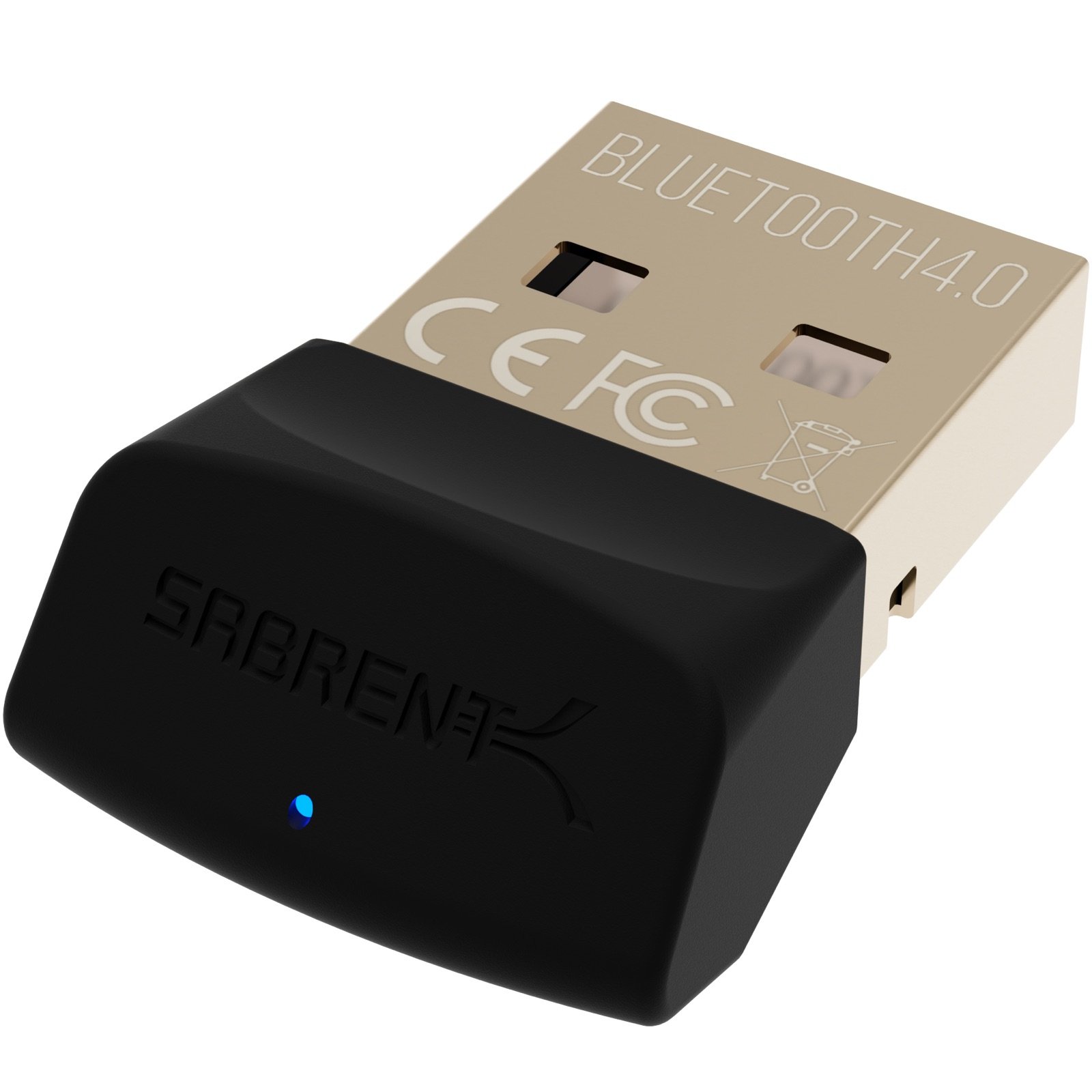
3,000+ ratings
Read Amazon ReviewsSABRENT BT-UB40 USB Bluetooth 4.0 Micro Adapter
Choose the TP-Link if Bluetooth 5.3 support and adjustable antenna positioning better suit your PC setup.
The SABRENT is a more basic Bluetooth 4.0 option for a buyer whose needs are covered by its listed version range and who prefers a micro-adapter form.
- The SABRENT BT-UB40 is a Bluetooth 4.0 Class 2 micro adapter with low-energy technology and compatibility with Bluetooth versions 3.0, 2.1, 2.0, and 1.1.
- The TP-Link UB500 Plus supports Bluetooth 5.3, several earlier versions, BLE, and an adjustable multidirectional antenna.
Is TP-Link UB500 Plus Worth It?
The TP-Link UB500 Plus is worth considering for Windows PC owners who need to add Bluetooth and value broad version compatibility, BLE, and an adjustable antenna.
Its setup is clearest for Windows 8.1, 10, and 11 with internet access, while Windows 7 users need to arrange a driver.
Its performance comparisons are maximum claims, so choose it for its feature set and placement flexibility rather than expecting a guaranteed range or speed in every environment.
If the compatibility and setup details fit your computer, it is a practical adapter to shortlist.
Your review at a glance
1,000+ ratings
Read Amazon ReviewsTP-Link UB500 Plus
A fit for Windows PC owners who want to add Bluetooth with an adjustable antenna and support for a range of older Bluetooth devices.
- Bluetooth 5.3 support with EDR technology.
- Backward compatibility with Bluetooth 4.2, 4.0, 3.0, 2.1, 2.0, and 1.1.
- Bluetooth Low Energy support.
- Adjustable, multidirectional antenna that can be rotated to change its position.