This tp link ax1500 review looks at the RE515X, a dual-band Wi-Fi 6 extender for homes with weak-signal areas and an existing router worth keeping.
Its Ethernet port, access point mode, and EasyMesh compatibility offer several ways to extend a network, while the advertised coverage and bandwidth figures are best treated as design targets rather than guaranteed results.
TP-Link RE515X Review Summary
The quick verdict
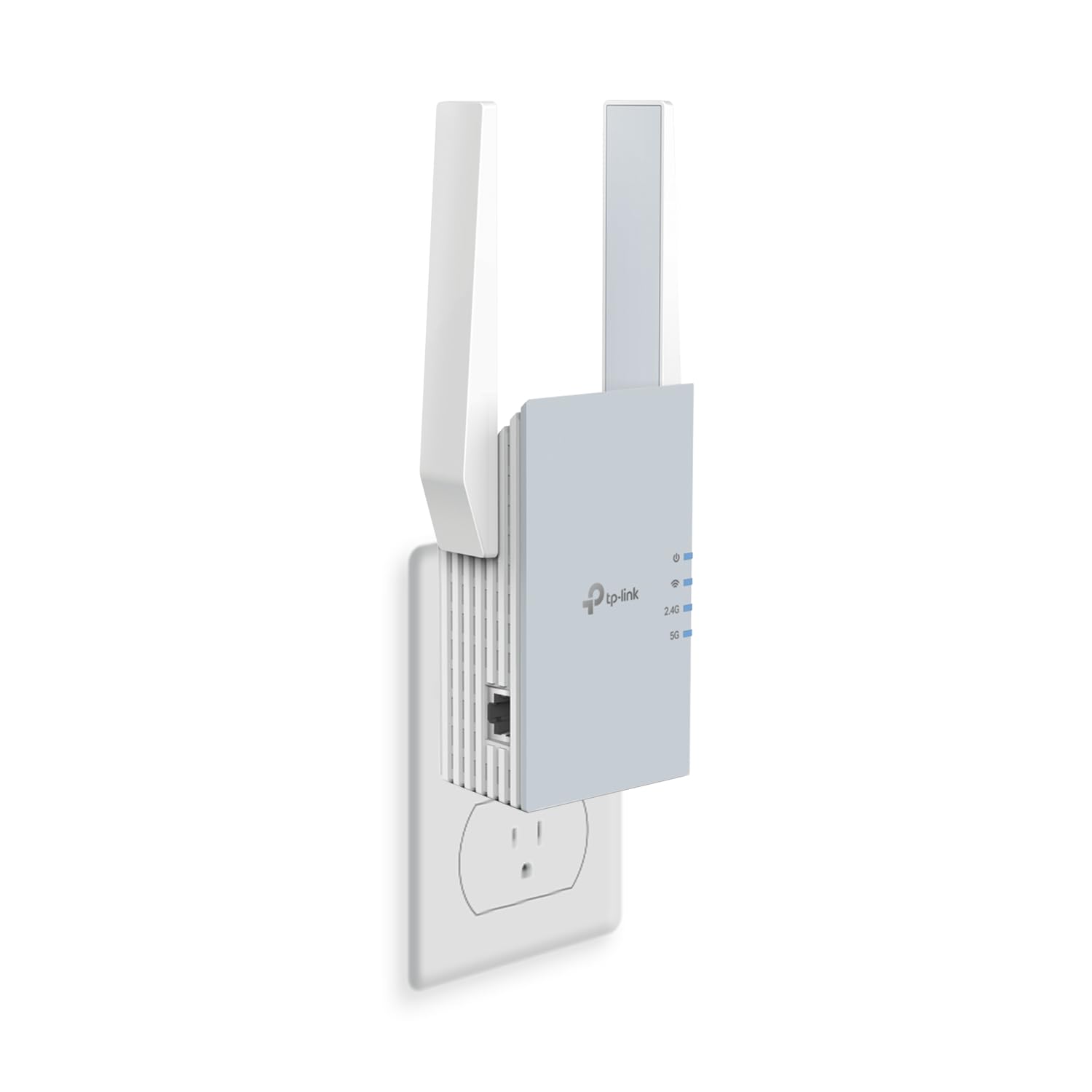
400+ ratings
Read Amazon ReviewsTP-Link RE515X
A practical fit for homes seeking to extend Wi-Fi coverage, connect one wired device, or add an access point through Ethernet.
- Dual-band Wi-Fi 6 with listed maximum bandwidth of 1201 Mbps on 5 GHz and 300 Mbps on 2.4 GHz.
- Two high-gain directional antennas and Beamforming technology are designed to improve signal strength, reliability, and range.
- Coverage is listed at up to 1800 square feet, with support for up to 64 devices.
- Gigabit Ethernet port can connect a wired device; access point mode can use a wired connection to create a Wi-Fi hotspot.

Pros
- Combines dual-band Wi-Fi 6 with a Gigabit Ethernet port for wireless and wired extension options.
- Directional antennas and Beamforming are aimed at strengthening coverage in areas a router does not reach well.
Consider before buying
- The 1.5 Gbps figure is combined band bandwidth, not a promise of the speed a device will receive.
- An extender depends on receiving a usable signal from the router, so placement between the router and weak area matters.
Read the full review summary
The RE515X combines 5 GHz and 2.4 GHz Wi-Fi 6 bands, two directional antennas with Beamforming, and a Gigabit Ethernet port.
TP-Link lists up to 1800 square feet of coverage and support for up to 64 devices; those maximums give a sense of its intended scope, but your results depend on where the extender sits and how well it can reach the router.
It suits buyers who want to address a specific coverage gap without replacing their router, especially if their router supports EasyMesh or they want to connect a wired device at the extender.
The Tether app and signal indicator may simplify setup and placement. As with any wireless extender, its purpose is to improve coverage, not directly raise the internet speed supplied by your plan.
The buying factors
TP-Link RE515X Scorecard
Editorial scores reflect listed features and buyer fit; they are not laboratory measurements or customer ratings.
Coverage flexibility
Directional antennas, Beamforming, and a stated coverage maximum of up to 1800 square feet make coverage extension the core use.
Wi-Fi capacity
Dual-band Wi-Fi 6 has a combined listed bandwidth of up to 1.5 Gbps, split between 5 GHz and 2.4 GHz.
Wired connectivity
The Gigabit Ethernet port supports a wired device or a wired input in access point mode.
Mesh integration
EasyMesh compatibility can make it a better fit when paired with a compatible router.
Setup guidance
The Tether app and intelligent signal indicator give buyers practical tools for setup and placement.
Device capacity
Support for up to 64 devices is useful for a household with many connected devices, though it is a maximum rather than a promise of performance under every load.
Key Features and Specifications of TP-Link RE515X
- Dual-band Wi-Fi 6 with listed maximum bandwidth of 1201 Mbps on 5 GHz and 300 Mbps on 2.4 GHz.
- Two high-gain directional antennas and Beamforming technology are designed to improve signal strength, reliability, and range.
- Coverage is listed at up to 1800 square feet, with support for up to 64 devices.
- Gigabit Ethernet port can connect a wired device; access point mode can use a wired connection to create a Wi-Fi hotspot.
- EasyMesh compatibility enables connection with an EasyMesh-compatible router.
- TP-Link Tether app supports setup and management, while an intelligent signal indicator helps identify a suitable location.
- Smart Adaptive Roaming is designed to connect devices automatically to the strongest signal.
Pros and Cons of TP-Link RE515X
Pros
- Combines dual-band Wi-Fi 6 with a Gigabit Ethernet port for wireless and wired extension options.
- Directional antennas and Beamforming are aimed at strengthening coverage in areas a router does not reach well.
- Access point mode gives the Ethernet port a second use when a wired network connection is available.
- App setup and a signal indicator can make initial placement easier to manage.
Consider before buying
- The 1.5 Gbps figure is combined band bandwidth, not a promise of the speed a device will receive.
- An extender depends on receiving a usable signal from the router, so placement between the router and weak area matters.
- EasyMesh benefits depend on owning a compatible router.
Who Should Buy TP-Link RE515X?
Good fit
Consider the RE515X if your router works well in most of the home but leaves one or more rooms with weak Wi-Fi.
Its dual bands, directional antennas, and Beamforming focus on extending the existing network, and the signal indicator can help you find a location that still receives a useful router signal while serving the target area.
It is also a reasonable option if you want a wired connection for a nearby device or have Ethernet available and would rather configure an access point.
If you use an EasyMesh-compatible router, that support may help it fit into a broader network setup. Check your router's mesh compatibility before buying if that feature is central to your decision.
The listed 5 GHz and 2.4 GHz bandwidths describe the radio capacity, not the speed of your internet plan or a guaranteed client speed.
Think of this model as a coverage tool: its value depends on whether it can improve the connection in the particular part of your home that needs help.
Who should skip it
Skip it if your main goal is a higher internet speed rather than improved Wi-Fi coverage; an extender does not directly increase the speed provided by your service.
Look at another network design if you need a guaranteed connection in a distant room but cannot place the extender where it receives a usable signal from the router.
Consider whether a wired access point connection is practical for your layout.
How the TP-Link RE515X fits a home Wi-Fi setup
Coverage depends on placement
The RE515X is intended to relay Wi-Fi beyond the router’s strongest area.
Its up-to-1800-square-foot figure and antenna design suggest a broad coverage role, but the practical placement tradeoff is straightforward: the extender needs a decent connection to the router as well as proximity to the area you want to reach.
The signal indicator is useful for comparing potential locations.
What AX1500 means for everyday use
The combined bandwidth comes from up to 1201 Mbps on 5 GHz and 300 Mbps on 2.4 GHz. Those bands provide different connection options, but the combined figure is not a single-device speed test result.
For a buyer, the key question is whether better signal in a problem area matters more than increasing the capacity of the internet service itself.
Ethernet adds useful flexibility
A Gigabit Ethernet port gives the extender a wired-device role, which can suit equipment that benefits from a physical connection. Access point mode also lets it turn a wired connection into Wi-Fi.
That makes the RE515X relevant both where the router’s wireless signal needs extension and where a wired network connection is available near the desired access point.
Mesh support is conditional
EasyMesh compatibility may help the extender work as part of a compatible router setup, and Smart Adaptive Roaming is designed to connect devices to the strongest signal.
These features are most relevant when the existing router supports the same mesh standard. Buyers should confirm that compatibility and decide whether their priority is mesh integration or simply filling a local coverage gap.
Alternatives to TP-Link RE515X
Repeaters alternative
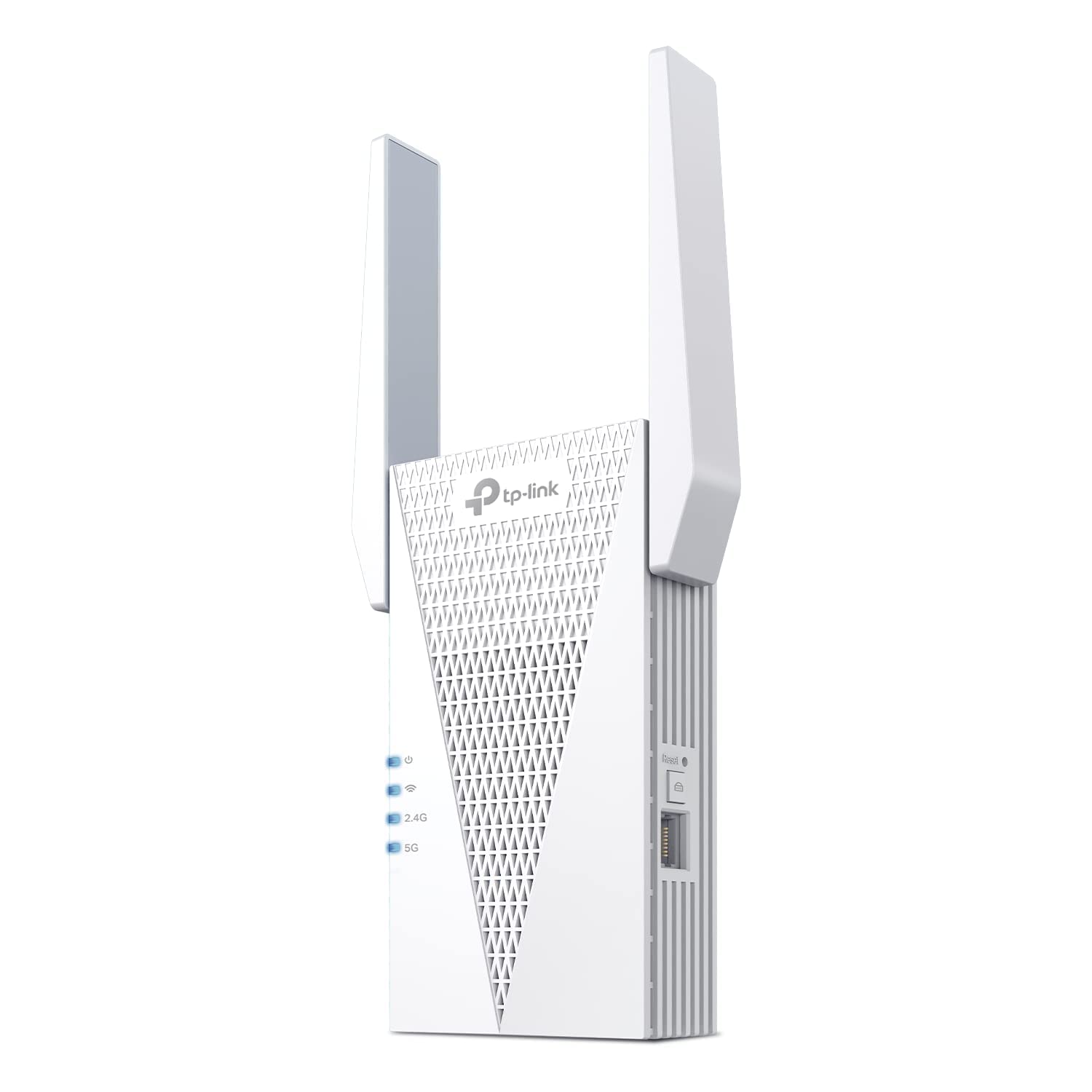
4,000+ ratings
Read Amazon ReviewsTP-Link RE715X
Choose the RE515X for a more modest coverage target and listed bandwidth. Consider the RE715X if the larger stated coverage area or higher combined bandwidth better matches your needs; actual performance for either depends on placement and conditions.
- The RE715X lists up to 3 Gbps combined bandwidth and coverage up to 2400 square feet.
- It also has a Gigabit Ethernet port, supports up to 64 devices, and is EasyMesh-compatible.
- The RE515X has up to 1.5 Gbps combined listed bandwidth and coverage up to 1800 square feet, with a Gigabit Ethernet port and EasyMesh compatibility.
Repeaters alternative
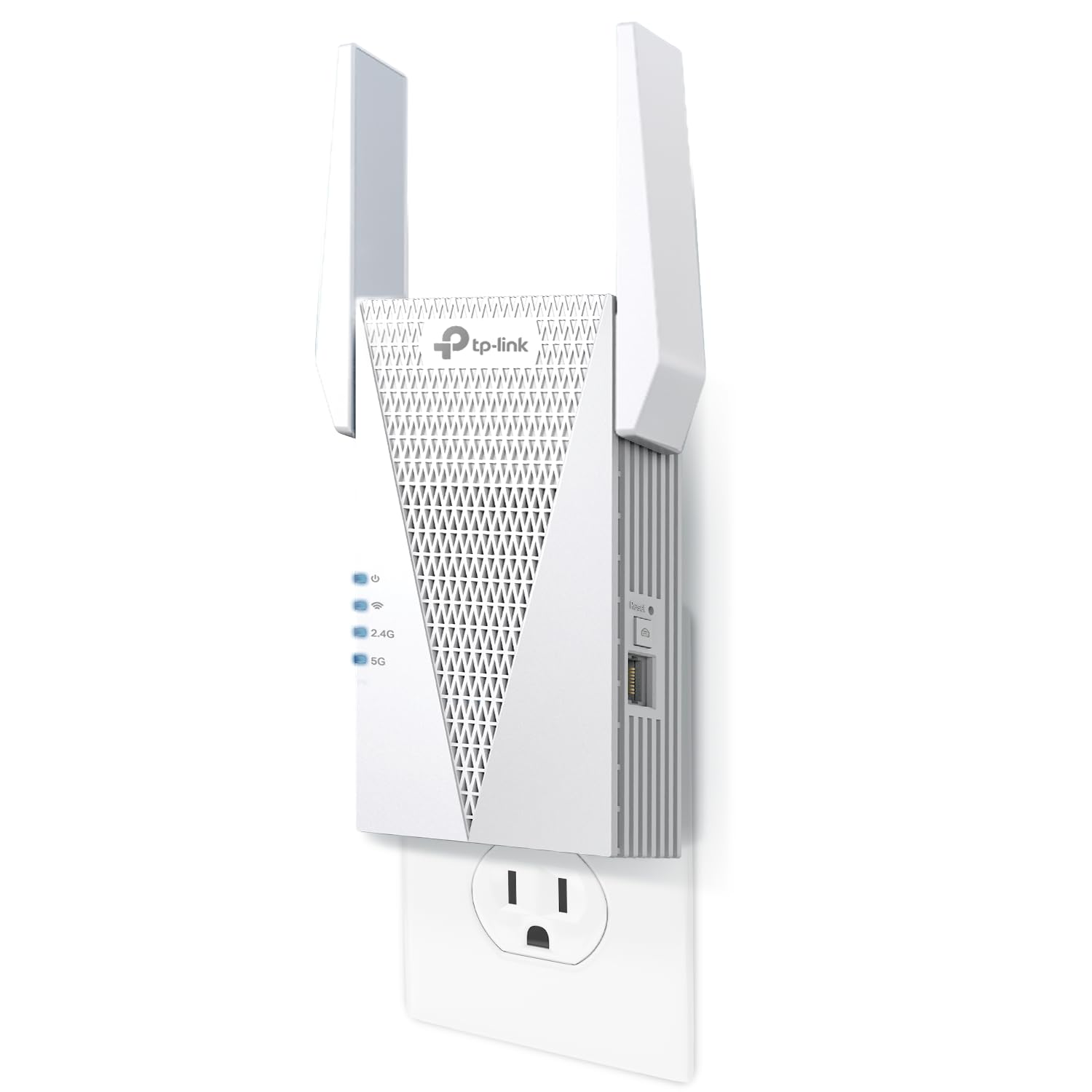
1,000+ ratings
Read Amazon ReviewsTP-Link RE615X
The RE615X is a relevant step up if you want a higher listed 2.4 GHz bandwidth and coverage maximum while keeping a similar dual-band extender design.
The RE515X may be the more appropriate fit if its stated coverage and band capacity already suit the area you need to reach.
- The RE615X lists up to 1.8 Gbps combined bandwidth, divided into up to 1201 Mbps on 5 GHz and 574 Mbps on 2.4 GHz, and coverage up to 2100 square feet.
- It includes a Gigabit Ethernet port and EasyMesh compatibility.
- The RE515X lists up to 1.5 Gbps combined bandwidth and coverage up to 1800 square feet, and includes a Gigabit Ethernet port and EasyMesh compatibility.
Is TP-Link RE515X Worth It?
The TP-Link RE515X is worth considering when you want to extend an existing Wi-Fi network, add a wired connection nearby, or use a wired input to create an access point.
Its Wi-Fi 6 bands, directional antennas, app setup, and EasyMesh support give it useful flexibility for a home coverage problem.
Buy it with realistic expectations: the stated coverage and bandwidth are maximums, placement affects the result, and the extender is designed to improve coverage rather than raise your internet plan’s speed.
Check router compatibility if EasyMesh is a deciding feature, and choose a different class of solution if the target area cannot receive a usable signal or wired connection.
Your review at a glance
400+ ratings
Read Amazon ReviewsTP-Link RE515X
A practical fit for homes seeking to extend Wi-Fi coverage, connect one wired device, or add an access point through Ethernet.
- Dual-band Wi-Fi 6 with listed maximum bandwidth of 1201 Mbps on 5 GHz and 300 Mbps on 2.4 GHz.
- Two high-gain directional antennas and Beamforming technology are designed to improve signal strength, reliability, and range.
- Coverage is listed at up to 1800 square feet, with support for up to 64 devices.
- Gigabit Ethernet port can connect a wired device; access point mode can use a wired connection to create a Wi-Fi hotspot.